


 In situ spectroscopic analyses (400–2500 nm) of iron and aluminum oxides – Effects of surface weathering in rock-art and mining contexts

Started in september 2022
Funding : Cifre grant / Ingen
Supervisor: Fabrice Monna (Artehis) ; co-supervisor: Christophe Durlet (Biogéosciences) ; co-supervisor: Chloé Morales (Ingen)
Abstract
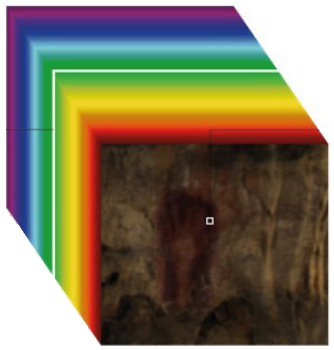
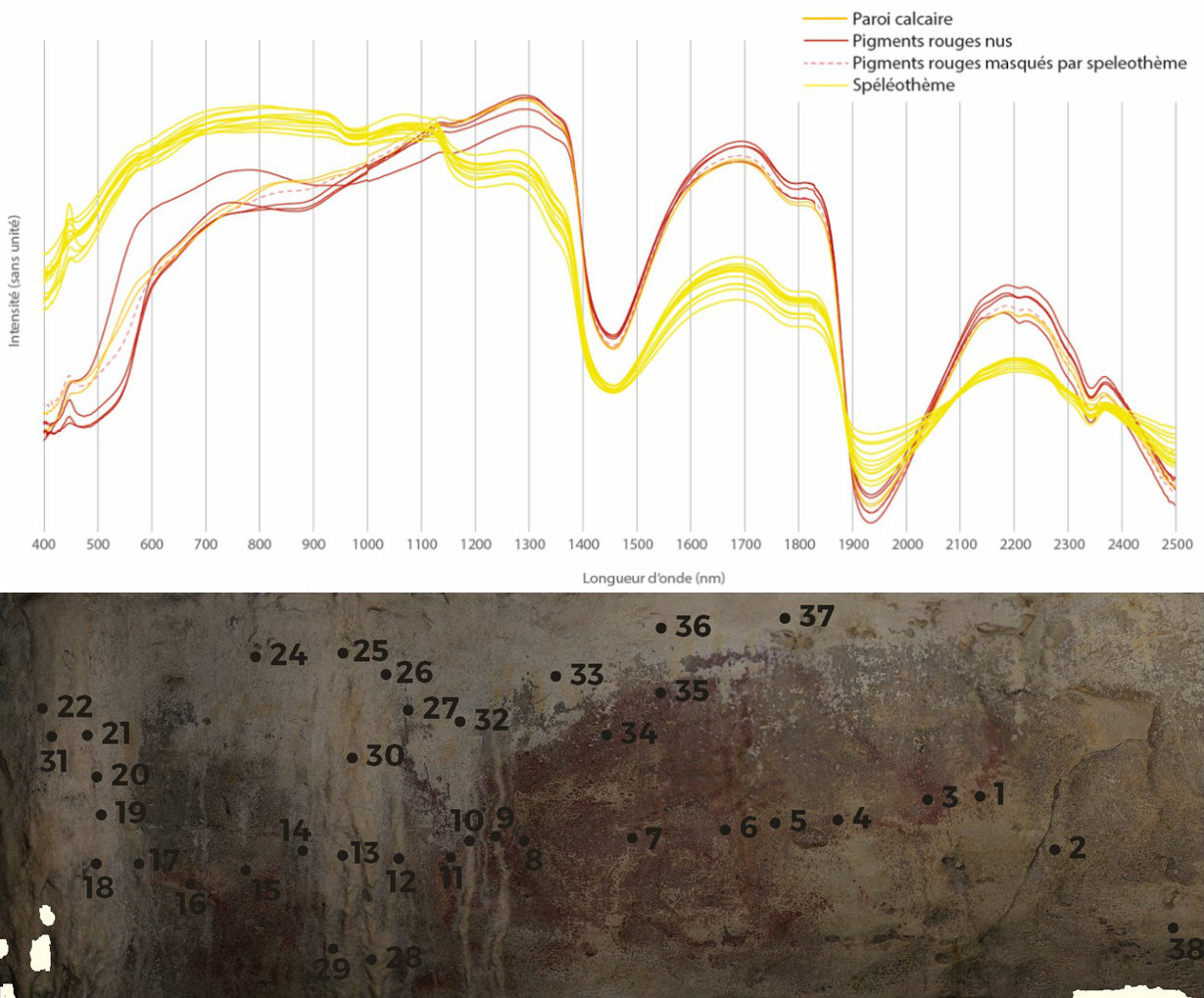 This PhD explores how light can be used to study materials without damaging or sampling them. It relies on spectroscopy and hyperspectral imaging, techniques that measure how surfaces reflect visible and infrared light to reveal their composition. Two very different contexts are investigated: prehistoric rock paintings hidden beneath calcite deposits in a cave, and weathered rock walls in an abandoned bauxite mine. In both cases, the surfaces have been altered over time by different process. The results show that surface alteration strongly modifies the measured spectral signal. Even so, it remains possible to reliably identify rock types or pigment-bearing units. However, estimating precise chemical compositions becomes much more difficult when surfaces are strongly altered. This research highlights both the potential and the limitations of non destructive spectral methods, and provides guidance for improving their use in real-world conditions, from cultural heritage studies to mining applications
Keywords
VNIR–SWIR reflectance spectroscopy, surface weathering, signal processing, spectral classification ; rock art, metallic oxide
Jury
Émilie Chalmin, Université Savoie Mont Blanc – examiner
Jean-Paul Deroin, université de Reims Champagne-Ardenne – reviewer
Christophe Durlet, Université Bourgogne Europe – cosupervisor
Jérome Magail, Musée d’anthropologie préhistorique de Monaco – examiner
Fabrice Monna, Université Bourgogne Europe – supervisor
Pierre Pellenard, Université Bourgogne Europe – examiner
Christophe Petit, Université Paris 1 Panthéon-Sorbonne – reviewer
Franck Smektala, INGEN : innovations géosciences – invited
- titre:
- Caractérisation des parois calcaires par analyses hyperspectrales et chimiques in situ : applications à l’étude du patrimoine bâti et des parois de cavités ornées
- date_de_debut_these:
- septembre 2022
- nom:
- Jal
- date_de_debut_these_numerique:
- 202209
- kc_data:
- a:8:{i:0;s:0:"";s:4:"mode";s:0:"";s:3:"css";s:0:"";s:9:"max_width";s:0:"";s:7:"classes";s:0:"";s:9:"thumbnail";s:0:"";s:9:"collapsed";s:0:"";s:9:"optimized";s:0:"";}
- kc_raw_content:
- In situ spectroscopic analyses (400–2500 nm) of iron and aluminum oxides - Effects of surface weathering in rock-art and mining contexts
Started in september 2022
Funding : Cifre grant / Ingen
Supervisor: Fabrice Monna (Artehis) ; co-supervisor: Christophe Durlet (Biogéosciences) ; co-supervisor: Chloé Morales (Ingen)
Abstract
This PhD explores how light can be used to study materials without damaging or sampling them. It relies on spectroscopy and hyperspectral imaging, techniques that measure how surfaces reflect visible and infrared light to reveal their composition. Two very different contexts are investigated: prehistoric rock paintings hidden beneath calcite deposits in a cave, and weathered rock walls in an abandoned bauxite mine. In both cases, the surfaces have been altered over time by different process. The results show that surface alteration strongly modifies the measured spectral signal. Even so, it remains possible to reliably identify rock types or pigment-bearing units. However, estimating precise chemical compositions becomes much more difficult when surfaces are strongly altered. This research highlights both the potential and the limitations of non destructive spectral methods, and provides guidance for improving their use in real-world conditions, from cultural heritage studies to mining applicationsKeywords
VNIR–SWIR reflectance spectroscopy, surface weathering, signal processing, spectral classification ; rock art, metallic oxide
Jury
Émilie Chalmin, Université Savoie Mont Blanc - examiner
Jean-Paul Deroin, université de Reims Champagne-Ardenne - reviewer
Christophe Durlet, Université Bourgogne Europe - cosupervisor
Jérome Magail, Musée d'anthropologie préhistorique de Monaco - examiner
Fabrice Monna, Université Bourgogne Europe - supervisor
Pierre Pellenard, Université Bourgogne Europe - examiner
Christophe Petit, Université Paris 1 Panthéon-Sorbonne - reviewer
Franck Smektala, INGEN : innovations géosciences - invited