


Jingke Lin PhD thesis
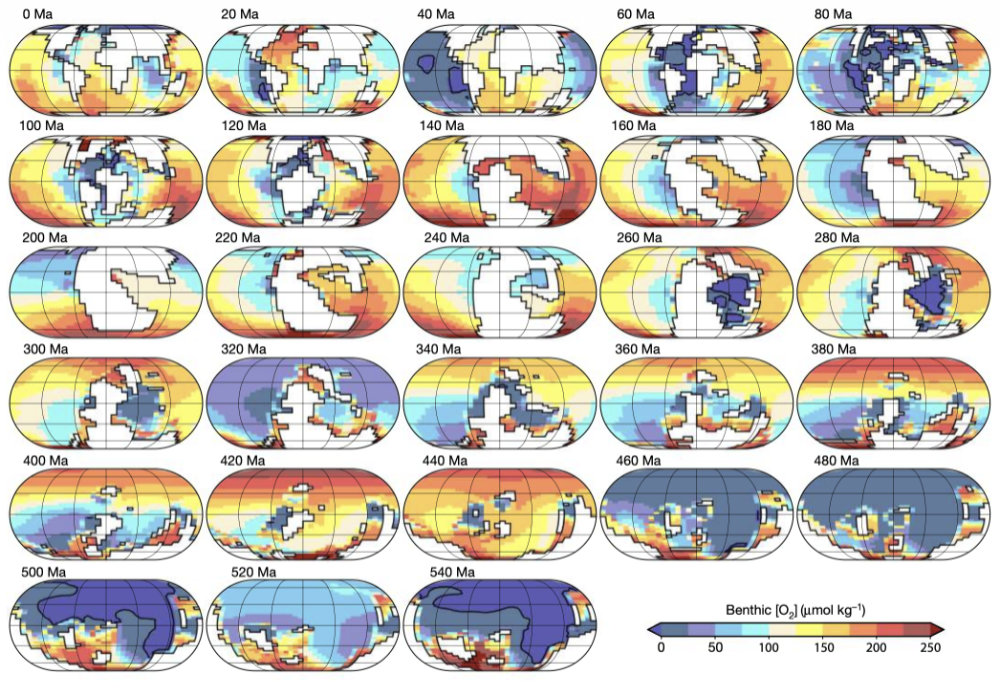 Simulating the impact of a sudden carbon cycle perturbation on climate and marine biodiversity over the last 540 million years
Started in january 2026
Funding: French national research agency (ANR)
Supervisors: Emmanuelle Pucéat and Alexandre Pohl
Abstract
At the geological time scale, Earth’s climate is controlled by the atmospheric CO2 concentration, which is regulated by strong feedbacks that control Earth’s carbon cycle. This “terrestrial thermostat” is based on the balance of carbon sources and sinks, respectively volcanic CO2 degassing and silicate rock weathering, the final result of which is the long-term sequestration of atmospheric CO2 in the form of carbonate rocks precipitated at the bottom of the oceans. However, on shorter time scales, the terrestrial carbon cycle can undergo significant disruptions. This is the case today due to the massive emission of CO2 from anthropogenic activities.
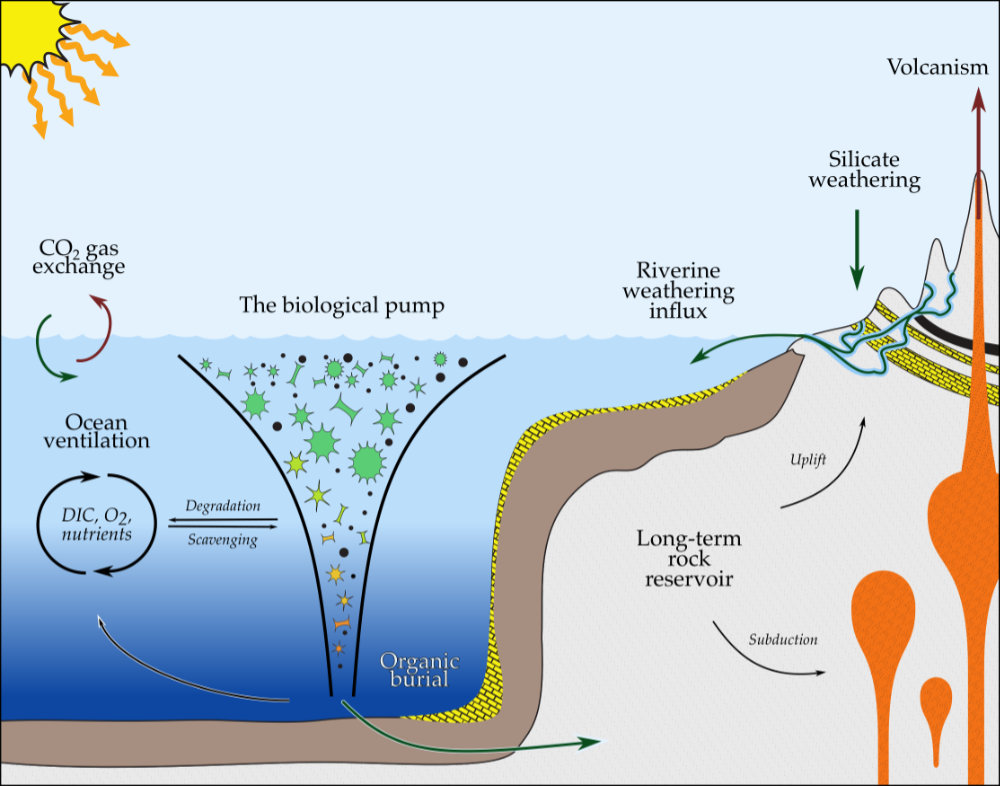 Many studies focus on contemporary climate change, the evolution of climate for the centuries to come, and its impacts on human societies and biodiversity. In comparison, the response of the climate system and marine biodiversity to sudden disruptions of the carbon cycle in the geological past remains poorly constrained. This limits our ability to put recent disruptions into perspective.
As part of this doctoral thesis, we will study the response of the climate system and marine biodiversity to sudden disruptions of the carbon cycle during the last 540 million years. If geochemical data make it possible to study this response during specific geological events, such as the Paleocene-Eocene thermal maximum around 56 million years ago, they often only allow the establishment of temporal correlations. Here we will instead choose to use numerical modeling of climate and biogeochemical cycles which, thanks to the experimental approach, will allow us to establish causal relationships and quantify processes.
We will carry out numerical experiments using a coupled climate–biodiversity Earth system model with the aim of quantifying the dependence on the configuration of continents of the response of climate and marine biodiversity to an injection of atmospheric carbon. We will focus on the last 540 million years, which represent the period during which animal life developed in the oceans to give rise to the faunas we know today. We will be particularly interested in the role played by the organic carbon cycle feedbacks in regulating climate.
The climate component of the model will be the Earth system model of intermediate complexity cGENIE, which offers a representation of climate and ocean biogeochemistry in a spatialized ocean in 3 dimensions. The environmental conditions simulated with cGENIE will feed the marine biodiversity model METAL (MacroEcological Theory on the Arrangement of Life). The METAL model is based on the calculation of the ecological niche – environment interaction and offers a robust representation of current biodiversity. Here we will use an improved version of the model, which will take into account the migration of species in response to climate change. To do this, we will implement a cellular automaton.
The expected results of the project will improve our understanding of the resilience of climate and marine biodiversity in the face of a major disruption of the carbon cycle. They will shed new light on the (in)stability of environmental conditions over the last 540 million years, and will make it possible to quantify the implications for the evolution of marine communities, in particular through the simulation of extinction rates.
Keywords
numerical Earth system model ; Phanerozoic ; carbon cycle ; marine biodiversity
Thesis advisory panel
Sarah Greene, University of Birmingham;
Michel Crucifix, université catholique de Louvain
- extrait:
- lien_externe:
- titre:
- Modélisation numérique de la réponse du système climatique à une perturbation brutale du cycle du carbone au cours des temps géologiques, et impacts sur la biodiversité marine
- date_de_debut_these:
- janvier 2026
- nom:
- Lin
- date_de_debut_these_numerique:
- 202601
- kc_data:
- a:8:{i:0;s:0:"";s:4:"mode";s:0:"";s:3:"css";s:0:"";s:9:"max_width";s:0:"";s:7:"classes";s:0:"";s:9:"thumbnail";s:0:"";s:9:"collapsed";s:0:"";s:9:"optimized";s:0:"";}
- kc_raw_content:
- Simulating the impact of a sudden carbon cycle perturbation on climate and marine biodiversity over the last 540 million years
Started in january 2026
Funding: French national research agency (ANR)
Supervisors: Emmanuelle Pucéat and Alexandre Pohl
Abstract
At the geological time scale, Earth’s climate is controlled by the atmospheric CO2 concentration, which is regulated by strong feedbacks that control Earth’s carbon cycle. This “terrestrial thermostat” is based on the balance of carbon sources and sinks, respectively volcanic CO2 degassing and silicate rock weathering, the final result of which is the long-term sequestration of atmospheric CO2 in the form of carbonate rocks precipitated at the bottom of the oceans. However, on shorter time scales, the terrestrial carbon cycle can undergo significant disruptions. This is the case today due to the massive emission of CO2 from anthropogenic activities.
Many studies focus on contemporary climate change, the evolution of climate for the centuries to come, and its impacts on human societies and biodiversity. In comparison, the response of the climate system and marine biodiversity to sudden disruptions of the carbon cycle in the geological past remains poorly constrained. This limits our ability to put recent disruptions into perspective.
As part of this doctoral thesis, we will study the response of the climate system and marine biodiversity to sudden disruptions of the carbon cycle during the last 540 million years. If geochemical data make it possible to study this response during specific geological events, such as the Paleocene-Eocene thermal maximum around 56 million years ago, they often only allow the establishment of temporal correlations. Here we will instead choose to use numerical modeling of climate and biogeochemical cycles which, thanks to the experimental approach, will allow us to establish causal relationships and quantify processes.
We will carry out numerical experiments using a coupled climate–biodiversity Earth system model with the aim of quantifying the dependence on the configuration of continents of the response of climate and marine biodiversity to an injection of atmospheric carbon. We will focus on the last 540 million years, which represent the period during which animal life developed in the oceans to give rise to the faunas we know today. We will be particularly interested in the role played by the organic carbon cycle feedbacks in regulating climate.
The climate component of the model will be the Earth system model of intermediate complexity cGENIE, which offers a representation of climate and ocean biogeochemistry in a spatialized ocean in 3 dimensions. The environmental conditions simulated with cGENIE will feed the marine biodiversity model METAL (MacroEcological Theory on the Arrangement of Life). The METAL model is based on the calculation of the ecological niche – environment interaction and offers a robust representation of current biodiversity. Here we will use an improved version of the model, which will take into account the migration of species in response to climate change. To do this, we will implement a cellular automaton.
The expected results of the project will improve our understanding of the resilience of climate and marine biodiversity in the face of a major disruption of the carbon cycle. They will shed new light on the (in)stability of environmental conditions over the last 540 million years, and will make it possible to quantify the implications for the evolution of marine communities, in particular through the simulation of extinction rates.Keywords
numerical Earth system model ; Phanerozoic ; carbon cycle ; marine biodiversity
Thesis advisory panel
Sarah Greene, University of Birmingham;
Michel Crucifix, université catholique de Louvain